
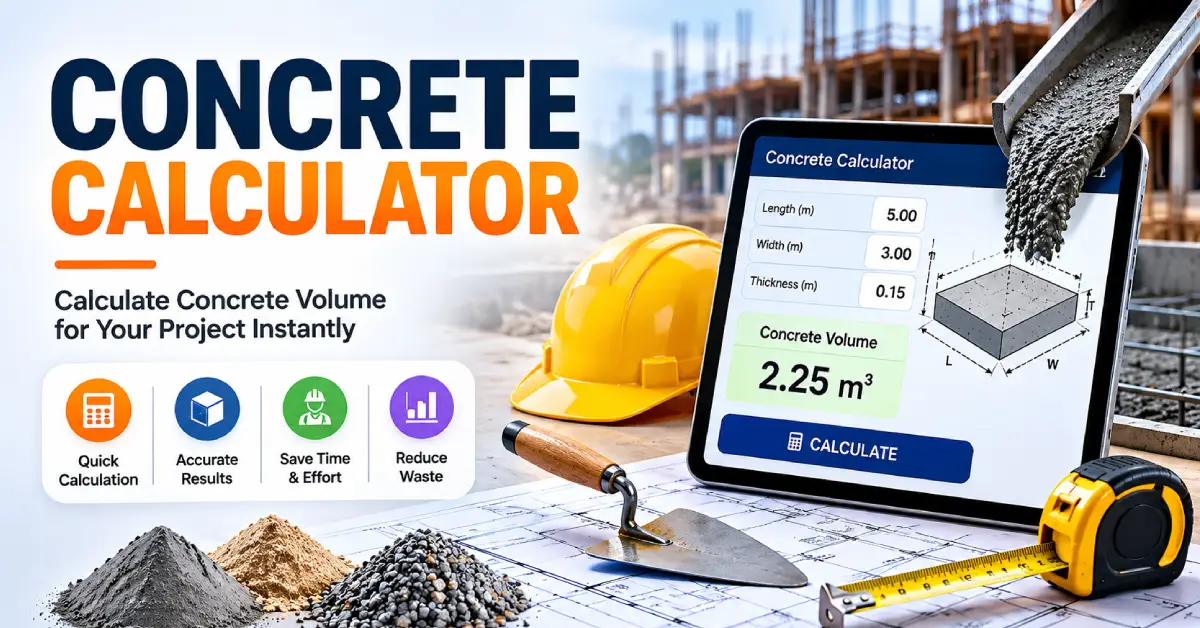
Concrete Calculator – Accurate Concrete Volume, Cement, and Material Estimation Guide
A reliable Concrete Calculator helps you get accurate results before you start pouring concrete. Enter Your Values to Calculate Concrete.
Concrete Volume Calculator
Concrete Estimate
1.30 cu yd
35.00 cu ft
0.99 m³
59 Bags
78 Bags
$175.50
Construction projects move quickly, and small measurement mistakes can waste a lot of money. Whether you are building a patio in Texas or a garage slab in California, correct measurements are very important. Today, many contractors and homeowners use a concrete volume calculator, cement calculator, and construction material calculator to make planning easier. These tools help calculate the right amount of concrete, cement, sand, and other materials in just a few seconds.
A concrete volume estimator also helps reduce material waste, save money, and improve accuracy for construction projects. It is useful for builders, DIY workers, and homeowners across the USA who want faster and more reliable estimates.
What is a Concrete Calculator and How Does It Work?
A concrete bag calculator is an online tool that helps you estimate how much concrete you need for a construction project. It calculates concrete volume using measurements like length, width, and thickness. Many builders and contractors use a concrete quantity calculator, concrete formula calculator, and building material calculator for home and commercial projects.
Many people ask, “What is a concrete volume estimator?” The answer is simple. It measures the area you want to fill with concrete and estimates the amount of cement, sand, aggregate, and ready-mix concrete needed. A concrete volume estimator online also helps users get fast and accurate results without doing difficult math by hand.
Why Concrete Estimation Is Important
Concrete prices are increasing across the USA. Ordering too much concrete wastes money and materials. Ordering too little can delay your project and increase labor costs. A smart construction concrete estimator helps solve these problems by providing quick and accurate calculations for patios, sidewalks, driveways, foundations, and basements.
Many builders and homeowners also use a DIY concrete quantity calculator and concrete measurement tool to plan projects better. Accurate estimates help improve budgeting, material planning, labor scheduling, and concrete pouring. Even small measurement mistakes can lead to expensive problems later.
Concrete Calculator Formula Explained with Simple Examples
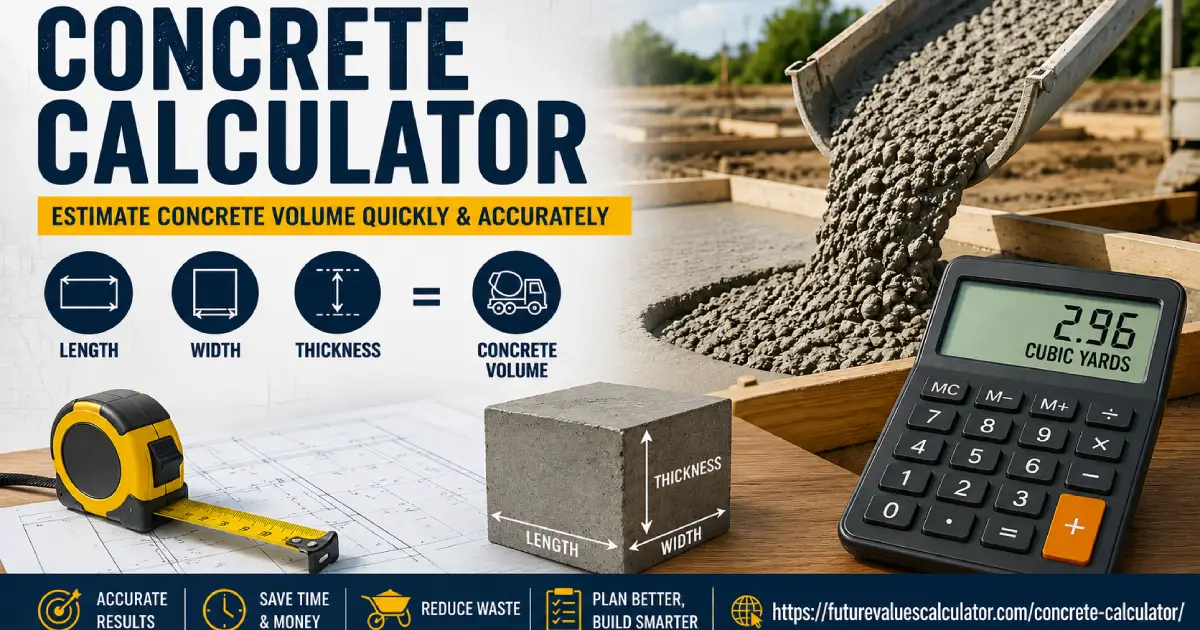
Every concrete quantity calculator uses a simple formula to calculate concrete volume. This formula helps builders, contractors, and homeowners estimate how much concrete is needed for a project.
Basic Concrete Formula
| Formula | Meaning |
|---|---|
| Length × Width × Depth | Total Concrete Volume |
This concrete calculation formula is commonly used for slabs, foundations, footings, patios, sidewalks, and driveways. Many contractors use a slab concrete calculator or concrete cubic meter calculator to get fast and accurate results without manual calculations.
Simple Concrete Calculation Example
Suppose your driveway is:
- 20 feet long
- 10 feet wide
- 0.5 feet deep
The calculation will be:
20 \times 10 \times 0.5 = 100
The total concrete volume is 100 cubic feet.
- square footings
- inch thickness
This method helps users calculate concrete volume quickly and accurately. Many people searching “How do I calculate concrete volume?” prefer online concrete quantity calculator because they save time and reduce mistakes.
Examples of Concrete Estimation
| Project | Dimensions | Estimated Volume |
|---|---|---|
| Patio Slab | 10 × 10 × 0.5 ft | 50 cubic feet |
| Driveway | 20 × 10 × 0.5 ft | 100 cubic feet |
| Sidewalk | 30 × 4 × 0.4 ft | 48 cubic feet |
A modern concrete pouring calculator can also convert cubic feet into cubic yards. This is important because most ready-mix concrete suppliers in the USA sell concrete by cubic yard.
How to Calculate Concrete Volume for Slabs, Footings, and Foundations
Concrete slabs need accurate measurements because even small thickness changes can increase the total concrete volume. Builders often use a foundation cement calculator, concrete thickness calculator, and concrete area calculator to get better accuracy. In most homes across the USA, concrete slabs are usually 4 inches or 6 inches thick.
Many homeowners ask, “How do you calculate concrete for a slab?” The process is simple. First, measure the length and width of the slab area. Then convert the slab thickness from inches into feet before multiplying all measurements together. This helps calculate the correct amount of concrete for patios, garage floors, driveways, and house slabs.
Foundation and Footing Calculations
Foundations and footings support the entire building, so accurate concrete estimation is very important. Contractors often use a ready mix slab calculator and concrete requirement calculator to estimate the right amount of material for foundation work.
Many people searching “How much concrete do I need for a foundation?” should always order a little extra concrete. Experts usually recommend adding about 5% more material to cover spills, uneven ground, shrinkage, and small measurement errors during pouring. This helps avoid delays and keeps the construction project running smoothly.
Concrete Mix Ratio Chart for Different Construction Projects
Concrete strength depends on using the correct mix ratio. A concrete mix calculator and concrete mix ratio calculator help builders create strong and durable concrete for different construction projects. Different jobs require different amounts of cement, sand, and aggregate.
| Mix Ratio | Common Usage |
|---|---|
| 1:1.5:3 | Heavy structural RCC work |
| 1:2:4 | Residential slabs and floors |
| 1:3:6 | Pathways and simple foundations |
Many people ask, “Which concrete mix ratio is best?” The answer depends on the type of project and the weight the structure must support. Stronger concrete mixes are better for beams, columns, and RCC structures. Lighter mixes work well for sidewalks, patios, and small residential projects.
Choosing the Right Concrete Mix Ratio
Weather conditions also affect concrete performance. In cold climates, builders use stronger and more durable concrete because freezing temperatures can damage weak mixtures over time. Contractors often use a cement sand aggregate calculator and RCC cement calculator to improve structural strength and stability.
A good concrete estimation tool also helps balance materials correctly. Too much water can weaken the concrete and reduce durability. Too little water can make the concrete hard to mix and pour properly. Using the right mix ratio helps improve strength, workability, and long-term performance.
How Many Bags of Cement Do I Need for Concrete?
Many beginners find cement estimation difficult, but a concrete bag calculator makes the process much easier. It helps calculate how many cement bags are needed based on concrete volume and mix ratio.
Many people ask, “How many bags of cement do I need?” In the USA, one standard 80-pound cement bag can produce about 0.6 cubic feet of concrete. Large construction projects often require many cement bags for slabs, foundations, patios, and driveways.
| Concrete Volume | Approximate Cement Bags |
|---|---|
| 10 cubic feet | 17 bags |
| 50 cubic feet | 84 bags |
| 100 cubic feet | 167 bags |
Cement Estimation Tips
It is always a good idea to order a little extra cement than the estimated amount. Small material losses often happen during transportation, mixing, and pouring. Many builders use a cement calculator and concrete cost calculator to estimate material needs and project expenses more accurately.
People also search, “How do you calculate cement, sand, and aggregate ratio?” because the correct material balance is very important for concrete strength and durability. Using the right proportions helps create stronger, longer-lasting concrete for construction projects.
construction concrete tool for Slabs, Columns, Beams, and Driveways
Concrete Calculation for Different Structures
Different construction projects need different types of concrete calculations. A driveway construction concrete tool focuses more on strength and load capacity, while a slab calculator mainly calculates surface area and thickness.
Driveways usually carry heavy vehicles, so they need thicker and stronger concrete than patios or sidewalks. In the USA, most driveways use thicker concrete to handle daily vehicle weight and prevent cracking. Builders often use a construction concrete tool for construction projects like garages, parking areas, and residential driveways to get accurate material estimates.
Structural Concrete Estimation
Columns and beams need strong reinforced concrete for better support and safety. Contractors often use an RCC foundation estimator and concrete estimator for structural construction work.
Many people ask, “Can I calculate concrete for columns and beams?” The answer is yes. However, structural projects usually need professional engineering guidance because steel reinforcement and load capacity are important parts of the design. Accurate calculations help improve safety, strength, and long-term durability of the structure.
Concrete Volume Calculator in Cubic Feet, Yards, and Meters
Concrete measurements are different in many countries, but cubic yards are most commonly used in the American construction industry. A concrete yard calculator helps convert cubic feet into cubic yards quickly and accurately.
| Unit | Conversion |
|---|---|
| 1 cubic yard | 27 cubic feet |
| 1 cubic meter | 35.31 cubic feet |
Many people ask, “How do you calculate concrete in cubic feet?” The process is simple. Multiply the length, width, and depth measurements in feet to find the total concrete volume. If you want the result in cubic yards, divide the total cubic feet by 27.
Easy Concrete Unit Conversion
Builders and contractors often use a concrete cubic meter calculator and concrete volume calculator for local and international construction projects. Accurate unit conversion helps avoid ordering mistakes, extra costs, and delivery delays.
People searching “How do you calculate concrete in cubic meters?” should first convert all measurements from feet into meters before using the concrete volume formula. Correct unit conversion helps improve accuracy and makes project planning much easier.
Difference Between RCC Calculator and Concrete Calculator
Many people think RCC and plain concrete are the same, but they are used for different purposes. A standard concrete yard calculator only estimates the amount of concrete needed for a project. An RCC foundation estimator, however, also helps calculate steel reinforcement used inside the concrete.
Many users ask, “What is the difference between RCC and concrete?” Plain concrete is strong under pressure but weak when stretched or bent. RCC, which stands for Reinforced Cement Concrete, contains steel bars that make the structure much stronger and more durable.
When to Use RCC Calculation
RCC is commonly used for beams, columns, roofs, and structural slabs because these parts of a building carry heavy loads. Plain concrete is usually used for patios, sidewalks, pathways, and other simple surfaces.
Builders often use a construction material calculator to estimate cement, steel, sand, and aggregate together for RCC projects. Accurate calculations help improve strength, safety, and construction quality.
Structural RCC work also requires proper engineering and correct reinforcement placement because weak concrete or poor steel support can create serious safety problems in the future.
Common Mistakes to Avoid When Calculating Concrete Quantity
Small mistakes during concrete estimation can lead to expensive problems later. Incorrect measurements often cause wrong volume calculations, which can result in ordering too much or too little concrete. A reliable concrete quantity calculator helps reduce these errors and improves accuracy.
Many homeowners forget to convert inches into feet before calculating concrete volume. Some people also ignore uneven ground or slope, which can greatly affect the final estimate. Anyone asking “How do you estimate concrete quantity?” should carefully check all measurements before placing an order.
Common Concrete Calculation Errors
| Mistake | Problem Created |
|---|---|
| Wrong thickness | Incorrect concrete volume |
| Ignoring wastage | Material shortage |
| Incorrect unit conversion | Over-ordering concrete |
Professional builders and contractors often use a concrete estimation tool and building concrete estimate system to get more accurate results. Proper planning helps save money, reduce waste, and avoid construction delays.
Benefits of Using an Online Concrete Calculator for Construction
Modern concrete calculators make construction planning much easier and faster. A free slab calculator gives instant results and helps users estimate materials more accurately. Builders, contractors, and homeowners can quickly calculate concrete volume without doing difficult manual calculations.
Using a concrete yard calculator online also helps reduce material waste and unnecessary labor costs. Faster calculations improve project planning, contractor scheduling, and coordination with concrete suppliers.
Why Online construction concrete tool Are More Accurate
Many people ask, “How accurate are construction concrete tool?” A high-quality calculator can provide very accurate estimates when the correct dimensions are entered. Builders also use a concrete material estimation tool and construction quantity estimation methods to improve budgeting and material planning.
Digital cement calculator remove guesswork from construction projects. They help users estimate concrete, cement, sand, and aggregate with more confidence before starting work. Accurate planning can save time, reduce waste, and prevent costly mistakes during construction.
FAQs
Q1. What is the best concrete calculator online?
The best calculator includes cubic yard conversion, material estimation, and mix ratio calculation in one platform.
Q2. How accurate are concrete calculators?
They are highly accurate when dimensions and thickness values are correct.
Q3. How much concrete do I need?
Measure length, width, and depth carefully. Then apply the volume formula.
Q4. Is there a free online concrete block calculator?
Yes. Many websites now provide free concrete estimation tools for homeowners and contractors.
Q5. How to estimate concrete cost?
Use a concrete cost calculator with local ready-mix pricing and labor rates for better budgeting.
Q6. How to calculate cubic yards of concrete?
To calculate cubic yards of concrete, multiply the length, width, and depth of the area, then divide the result by 27. This helps you estimate how much concrete your project needs.
Conclusion
A reliable concrete bag calculator transforms difficult construction math into a fast and simple process. Whether building a driveway, slab, sidewalk, or foundation, accurate measurements save time and money.
Modern builders now depend on a concrete volume calculator, construction concrete estimator, and concrete bag calculator for construction projects daily. Better estimation improves material planning, reduces waste, and creates stronger long-lasting structures.
Our other best free Calculators
A Future Value Calculator online is a powerful financial tool that helps you estimate how much your money will grow over time with interest.
A Loan EMI Calculator helps you quickly find out how much you need to pay every month for your loan.
A CPM, CPC, and CTR Calculator helps you understand how well your ads are performing.
A Construction Calculator makes building planning simple and fast.
Planning your retirement can be daunting, but an advanced 401k calculator makes it simple.
A free hourly to salary calculator lets you easily turn your hourly pay into a yearly salary—or the other way around.
A simple and reliable tool designed to help you understand how your property can grow over time.
Our pool salt calculator makes it easy to determine how much salt your pool needs.
The bench press calculator helps you estimate your one rep max (1RM), which is the maximum weight you can lift for one repetition.
A Gematria Calculator helps you change letters into numbers using old rules.
A peptide calculator is a simple tool that helps people work with peptides easily and correctly.
Losing weight becomes easier when you can see where your efforts may lead.
A limestone calculator is a smart estimation tool that helps you measure the exact amount of stone needed for any project.